Colorado Patent Attorneys
Utility, design, provisional, and PCT patent applications for inventors and companies in Colorado, across the U.S., and abroad.
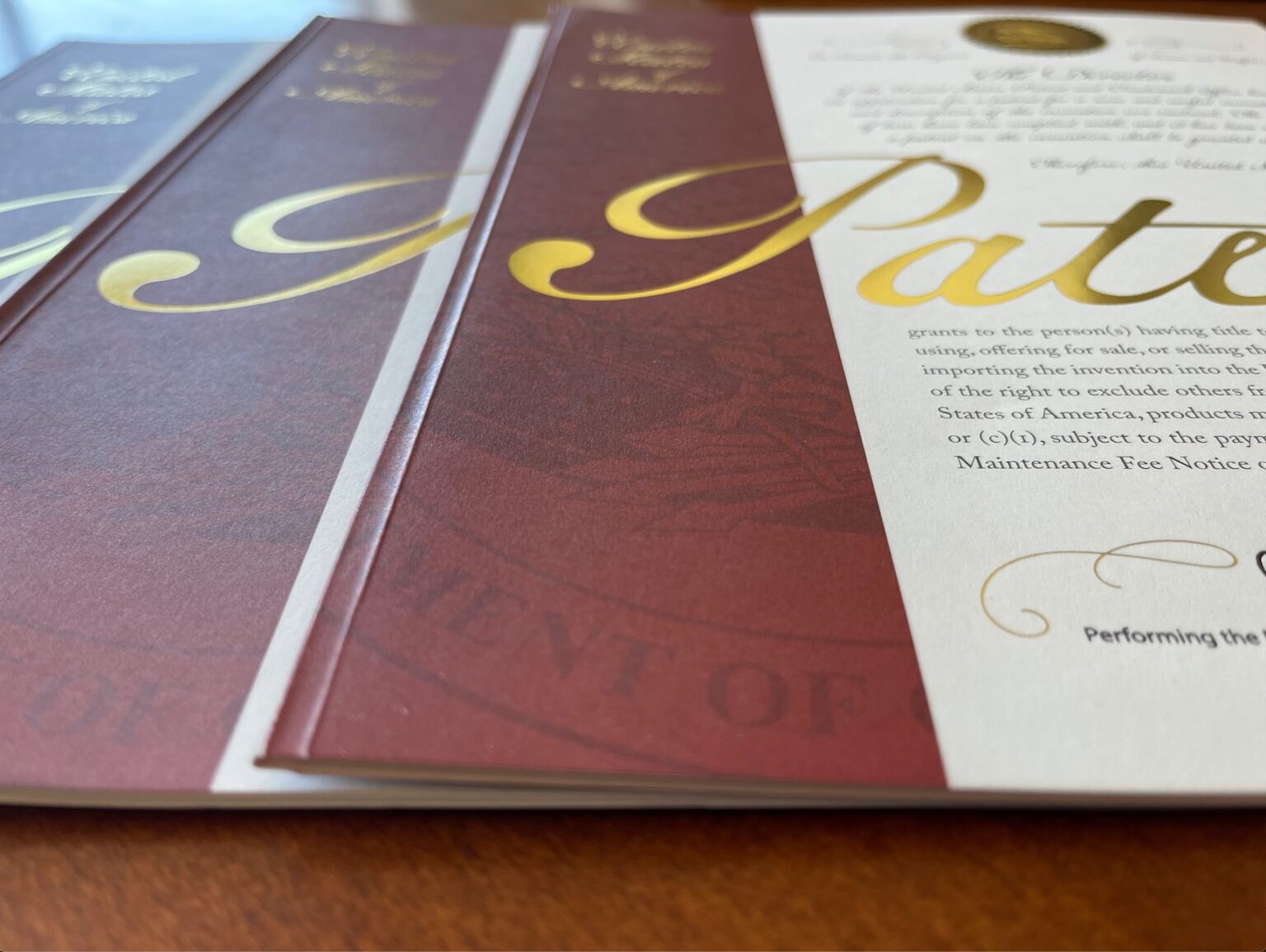
Our Denver and Boulder patent team prepares and files U.S., foreign, and PCT patent applications. We work closely with inventors to understand each invention, so our attorneys can draft applications that protect and cover as much subject matter as possible.
Why register for patent protection?
Protect your inventions. Put others on notice of your ownership. Patent owners have exclusive rights during the term of the patent.
Stop infringers. A U.S. utility patent generally lasts 20 years from filing and lets you seek an injunction and damages if your rights are infringed.
Do more with your invention. An issued patent opens more licensing opportunities during its term. IP licensing ›
What is patentable?And what is not.
Patentable subject matter.
- New inventions, such as processes, machines, manufactures, and compositions of matter.
- Plants developed or discovered by the inventor that have been found stable through asexual reproduction.
- For design patents, the design embodied in or applied to an article of manufacture, or a portion of it, rather than the article itself.
- Certain types of software or algorithms.
Not patentable.
- Abstract ideas, laws of nature, and natural phenomena, including products of nature.
- An invention that is not novel, lacks utility, or is an obvious improvement.
- Confidential formulas or know-how, which may be best protected as a trade secret.
- Software source code, which is protected by copyright.
Professional patent services.From first search to issued patent.
Patentability and prior art searches. Find out whether your invention is patentable before you spend thousands on prosecution.
Learn more ›Provisional applications. Secure an early filing date and the right to mark your product “patent pending.”
File online ›Utility applications. Applications drafted broadly to protect how your invention works and is used.
Learn more ›Design applications. Protection for the ornamental design of a product.
File online ›PCT international applications. Filings under the Patent Cooperation Treaty, with help choosing jurisdictions and translating your application.
Learn more ›Office action responses. Prosecution of your application, including responses to office actions from the USPTO.
Learn more ›Appeals. Representation through appeals and other proceedings all the way to issuance.
Learn more ›Patent law overview.Quality prosecution at a manageable cost.

Lower filing costs.
Flat-fee drafting and discounted filing rates.
Our Colorado patent prosecution team can help you and your company reduce patent filing costs with flat-fee application drafting, by determining whether you qualify for discounted small entity filing rates, by keeping your examination costs manageable, and by helping you protect your invention once the application is granted.
Our experienced patent lawyers and agents are based in Denver and Boulder and are available for in-office, video, or on-site consultations. We help inventors with an initial patentability and prior art search, U.S. patent application drafting and filing, prosecution of the application at the patent office, potential appeals, and everything through issuance.
Applications drafted to protect more.
We start by understanding your invention.
We are committed to bringing you the highest quality patent prosecution and patent application services in Colorado and delivering measurable results. When we prepare and file a patent application on your behalf, we work closely with the inventors to understand the invention, so our attorneys can draft the application broadly to protect and cover as much subject matter as possible.
A careful prior art review.
Save thousands before you file.
Our Denver-area patent attorney team meticulously reviews the prior art and compares it to your invention. Taking the time to determine whether your invention or product is patentable can save you thousands of dollars in prosecution costs and help you avoid a costly litigation battle, which helps keep your filing costs below those of other firms.
International patent applications.
Filed under the Patent Cooperation Treaty.
Our Colorado patent lawyers prepare and file international patent applications in compliance with the Patent Cooperation Treaty (PCT). We can help you decide which jurisdictions to file in and help translate your patent application.
We work with a network of reliable, trusted patent attorneys abroad who are members of the International Association for the Protection of Intellectual Property (AIPPI).
Patent terms, defined.A short glossary for inventors.
- Prior art
- Previously used or published information that may be referred to in a patent application or examination report. In a broad sense, it is technology relevant to an invention that was publicly available, for example described in a publication or offered for sale, before the application’s effective filing date. In a narrow sense, it is any such technology that would invalidate a patent or limit its scope. Prosecuting a patent or interpreting its claims largely consists of identifying relevant prior art and distinguishing the claimed invention from it, and a prior art search aims to find the patent and non-patent documents that show whether an invention is novel and non-obvious.
- Patentability
- The ability of an invention to satisfy the legal requirements for patent protection. Before a patent can issue, the invention must be novel, useful, non-obvious (or involve an inventive step, at the European Patent Office), and qualify as patentable subject matter. For example, scientific theories and mathematical methods are not regarded as patentable subject matter at the EPO.
- Novelty
- The requirement that an invention must not have been disclosed to the public or offered for sale, in any way or any location, before the filing or priority date. In the U.S., a limited one-year grace period applies to certain disclosures made by the inventor.
- Non-obviousness
- The standards became stricter after the Supreme Court’s decision in KSR v. Teleflex, which reapplied the framework from Graham v. John Deere Co. At a basic level, an improvement is non-obvious if it would not have been obvious to a person having ordinary skill in the relevant art. If you are unsure whether your invention is non-obvious, it is in your best interest to consult a patent attorney.
- Patent prosecution
- The process from filing a patent application through issuance, including responses to rejections and objections, double patenting arguments, appeals, and related proceedings before a patent office.
- Design patent
- A patent granted by the USPTO for the ornamental design of a functional object (35 U.S.C. 171). Design patents filed on or after May 13, 2015 have a term of 15 years from the date of grant.
- Utility patent
- A patent issued by the USPTO that protects the way an article is used and works (35 U.S.C. 101). Utility patents generally have a term of 20 years from the application’s filing date, which can vary based on a number of factors. Consult a patent attorney about specific dates.
- Patent Cooperation Treaty (PCT)
- An international treaty with more than 150 contracting states that streamlines filing by providing a uniform set of standards and procedures for patent applications in member states. Most major patent offices, including those of the U.S., Germany, and Japan, are PCT members.
- Anticipation
- When cited prior art discloses every feature of a claim and enables a person having ordinary skill in the art to make and use the claimed invention, the claim is anticipated and rejected for lack of novelty.
- Claims
- The section of a patent that defines the metes and bounds of the invention the inventor intends to protect. Independent claims define the invention broadly, while dependent claims narrow its scope and cover additional features.
- Office action
- A document written by a patent examiner and issued during examination. Office actions may request clarification or additional information, reject or object to claims, or allow an application.
Serving inventors across Colorado.From the Front Range to the mountains.
Our Colorado patent attorneys will discuss your options and help you find the right course of action to protect your rights.
- Boulder
- Broomfield
- Louisville
- Denver
- Fort Collins
- Telluride
- Vail
- Breckenridge
- Winter Park
- Steamboat Springs
- Westminster
- Arvada
- Englewood
- Aurora
- Thornton
- Brighton
- Lakewood
- Littleton
- Colorado Springs
- Pueblo
- Golden
Have an invention to protect?
Talk with an experienced Colorado patent attorney about your invention, or file a provisional application online today.
Schedule a consultationFile a provisional patent ›Patent Law FAQ
What is a patent?
A patent is a property right granted by a government, in this case the United States, to an inventor “to exclude others from making, using, offering for sale, or selling the invention throughout the United States or importing the invention into the United States” for a limited time, in exchange for public disclosure of the invention when the patent is granted.
Source: U.S. Patent and Trademark Office
I invented something. Should I patent it?
What did you invent? Does it already exist? Did you invent a new apparatus, process, or article? Is your improvement novel, useful, and non-obvious? Many standards must be met before an invention is considered patentable. Did you invent a new design for an article? That may be eligible for design patent protection.
What is the term of a patent?
For a utility patent, the normal term of protection is 20 years from the filing date. For a design patent filed on or after May 13, 2015, the term is 15 years from the date of grant. Maintenance fees must also be paid periodically to keep a utility patent in force.
Can I protect an invention outside of the United States?
Yes. For the most options, you will probably need to file a PCT application, which follows a separate set of rules from the U.S. Patent and Trademark Office. Contact a patent attorney to discuss your options for international filing.
How do I get “Patent Pending” on my product?
Not much is required to add a “patent pending” label to a product. At a minimum, you need to file a provisional patent application. While we do not normally recommend relying on this option alone, it is appropriate in certain circumstances. Contact an attorney to discuss how best to proceed.
Who can apply for a patent?
A patent application must name the actual inventor or inventors. A company can be the applicant, as a juristic entity, or the assignee of one or more patents.
Are there other types of patents?
In most cases, there are three types of patents: utility, design, and plant patents. Utility patents protect a physical apparatus or a method of making it. Design patents protect the appearance of an invention; a unique soda bottle design is an example of something that might be protected by a design patent. Plant patents, the least common type, protect inventors who have invented or discovered and asexually reproduced a distinct and new variety of plant, other than a tuber-propagated plant or a plant found in an uncultivated state.
What can be patented?
Utility patents are available for a novel, non-obvious, and useful:
- Process
- Machine
- Article of manufacture
- Composition of matter
- Improvement of any of the above
Patent protection is also available for the ornamental design of an article of manufacture (design patents) and for asexually reproduced plant varieties (plant patents). What cannot be patented: laws of nature, physical phenomena, abstract ideas, literary, dramatic, musical, and artistic works (which can be protected by copyright), and inventions that are not useful, such as perpetual motion machines, or that are offensive to public morality.
Source: U.S. Patent and Trademark Office